Building a Skincare Routine You’ll Actually Stick To

Let’s be honest for a second. Most people don’t quit a skincare routine because they’re lazy. They quit because it becomes confusing, expensive, and way too time-consuming. One day your routine has three steps. A month later, you’re staring at a bathroom shelf wondering when skincare turned into a chemistry experiment.
A good skincare routine shouldn’t feel like homework. It should feel doable—something you can stick to even on busy days. That’s what actually makes the difference.
This guide is about building a routine that works in real life, not just on Instagram.
Why a Skincare Routine Is Worth Having
Your skin doesn’t get days off. It deals with sun exposure, pollution, sweat, stress, and whatever else your day throws at it. Without a basic routine, all of that slowly adds up. Sometimes it shows up as breakouts. Other times it’s dryness, rough texture, or skin that just looks tired all the time.
A consistent skincare routine helps your skin stay balanced. It keeps things from spiraling before they become bigger problems. You don’t need perfection—you just need consistency.
Before Anything Else, Know Your Skin
This part gets skipped way too often, and it causes most skincare frustration.
If you have oily skin and use heavy products meant for dry skin, you’ll break out. If you have dry skin and use strong acne treatments, your skin will feel tight and irritated. It’s not that the products are bad—they’re just wrong for you.
In simple terms:
- Oily skin produces excess shine and breaks out easily
- Dry skin feels tight, flaky, or rough
- Combination skin is oily in some areas and dry in others
- Sensitive skin reacts quickly with redness or stinging
Once you understand your skin type, building a skincare routine gets much easier.
The Skincare Routine Order (This Actually Matters)
You can buy great products and still see no results if you use them in the wrong order. The right skincare routine order helps products absorb properly and do what they’re supposed to do.
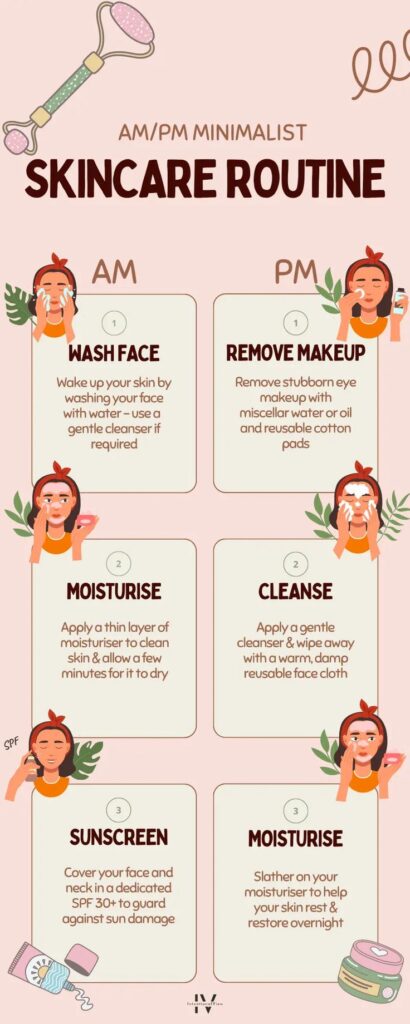
Morning Routine
Morning skincare is about protection.
Start with a cleanser to wash away oil and sweat from the night. You don’t need anything harsh—clean doesn’t mean squeaky.
If you like using a toner, apply it next. This step is optional, not mandatory. Some people love it, others skip it completely.
Next comes your serum. In the morning, many people use vitamin C to help with brightness and environmental protection, but this step depends on your skin’s needs.
Follow with a moisturizer. Even oily skin needs hydration. Skipping moisturizer often makes oiliness worse, not better.
Finish with sunscreen. This isn’t just a beach-day thing. Daily SPF is one of the most important steps in any skincare routine, especially for preventing early aging and dark spots.
Night Routine
Nighttime skincare is about repair.
Cleanse your skin to remove sunscreen, makeup, and buildup from the day. This step matters more at night than in the morning.
If you use toner, apply it after cleansing.
This is when you apply treatments or serums, like exfoliating acids or retinoids. These work best at night when your skin isn’t exposed to the sun.
Seal everything in with a moisturizer to support your skin while you sleep.
Using The Ordinary Skincare Without Overdoing It
The Ordinary skincare products are everywhere—and for good reason. They’re affordable and ingredient-focused. But they’re also easy to misuse, especially if you try to use too many at once.
The biggest mistake people make with The Ordinary is layering multiple active ingredients together. That usually leads to irritation, not better skin.
A few simple rules help a lot:
- Use one active ingredient at a time
- Don’t combine strong acids with retinol
- Exfoliate only a few times a week
- Patch test before using a new product
Niacinamide, hyaluronic acid, and salicylic acid are popular choices because they’re effective without being overly aggressive when used correctly.
Common Skincare Routine Mistakes
Even people who are serious about skincare fall into these traps:
- Exfoliating too often
- Skipping sunscreen because it “feels heavy”
- Changing products every couple of weeks
- Buying trends instead of understanding ingredients
- Expecting instant results
Skin doesn’t change overnight. And if a routine feels stressful, it usually won’t last.
How Long Does a Skincare Routine Take to Work?
This part requires patience.
Hydration usually improves within a couple of weeks. Breakouts can take a month or more to calm down. Texture and overall skin tone often take six to eight weeks to show noticeable improvement.
That’s normal. Slow progress is still progress.
Let Your Routine Evolve
Your skin changes with seasons, stress, age, and lifestyle. A skincare routine that works in summer might feel wrong in winter. That doesn’t mean it failed—it just means your skin needs something different now.
Sometimes the best thing you can do is simplify.
Final Thoughts
A skincare routine doesn’t need to be complicated to be effective. Clean your skin, follow a sensible skincare routine order, protect it with sunscreen, and use targeted products like The Ordinary skincare thoughtfully.
When skincare fits into your life instead of taking it over, you’re far more likely to stick with it—and that’s what actually leads to healthier skin over time.
Good skin isn’t about doing more. It’s about doing what works, consistently.